Early Findings: Extending Seal Blade Wear Life on a Frozen Pizza Flow Wrapper
- September 1, 2026
- Industrial Production
Summary for the impatient: A US frozen pizza producer is running cryogenically treated hard chrome plated aluminum seal blades on a horizontal flow wrapper. Two blades have been pulled and inspected: no wear at the edge, no noticeable wear elsewhere, chrome plating holding up better than expected, and baked-on buildup coming off easily. What we do not have yet is run hours, an untreated control, or more than two blades — so this is an early finding reported with its limits attached, not a result. Blade alloy matters here too: cryogenic treatment of stainless steel sets out which grades respond and which do not.
Blades are a consumable. The question is how long they stay one.
On a horizontal flow wrapper running heated seal blades, the blade is bought knowing it will wear out. The edge rounds over from continuous film contact at sealing temperature. Polymer residue bakes onto the seal face until seal integrity drifts. So the plant runs a cycle: pull the blade, clean it, rotate it, and eventually scrap it and drop in a new one.
Every extra cycle a blade survives is money — fewer replacement blades, fewer changeovers, less time with the line open. That is the goal this trial was built around: make the blade hold its edge and stay in circulation longer.
There is a second, quieter wear mechanism hiding in that cycle. A blade that needs aggressive cleaning gets cleaned aggressively — and scraping baked-on buildup off hard enough, often enough, takes blade material off with it. The cleaning process itself shortens the life of the thing being cleaned. Any honest attempt to extend blade life has to break that loop too.
The application: a long-seam seal on a horizontal flow wrapper
A US frozen pizza producer runs uncased pizzas onto film on a horizontal flow wrapper. The film folds over the product and a long-seam seal both cuts the film and melts the two layers together as the pack passes.
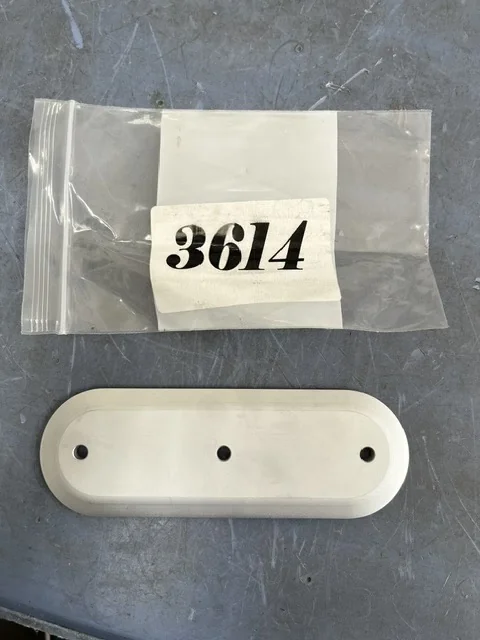
One of the treated blades after cleaning and inspection.
The blade doing that work is aluminum clad in hard chrome plating, mounted into a head with internal heating elements that hold it at sealing temperature. On a continuous side sealer — the class of machine doing this job — the part usually goes by side seal blade, or on the shop floor, the hot knife. It is a demanding duty cycle: sustained elevated temperature, continuous contact with polymer film, thermal cycling at every startup and every sanitation shutdown, and adhesive transfer building on the working face throughout. Everything about that cycle works against the edge.
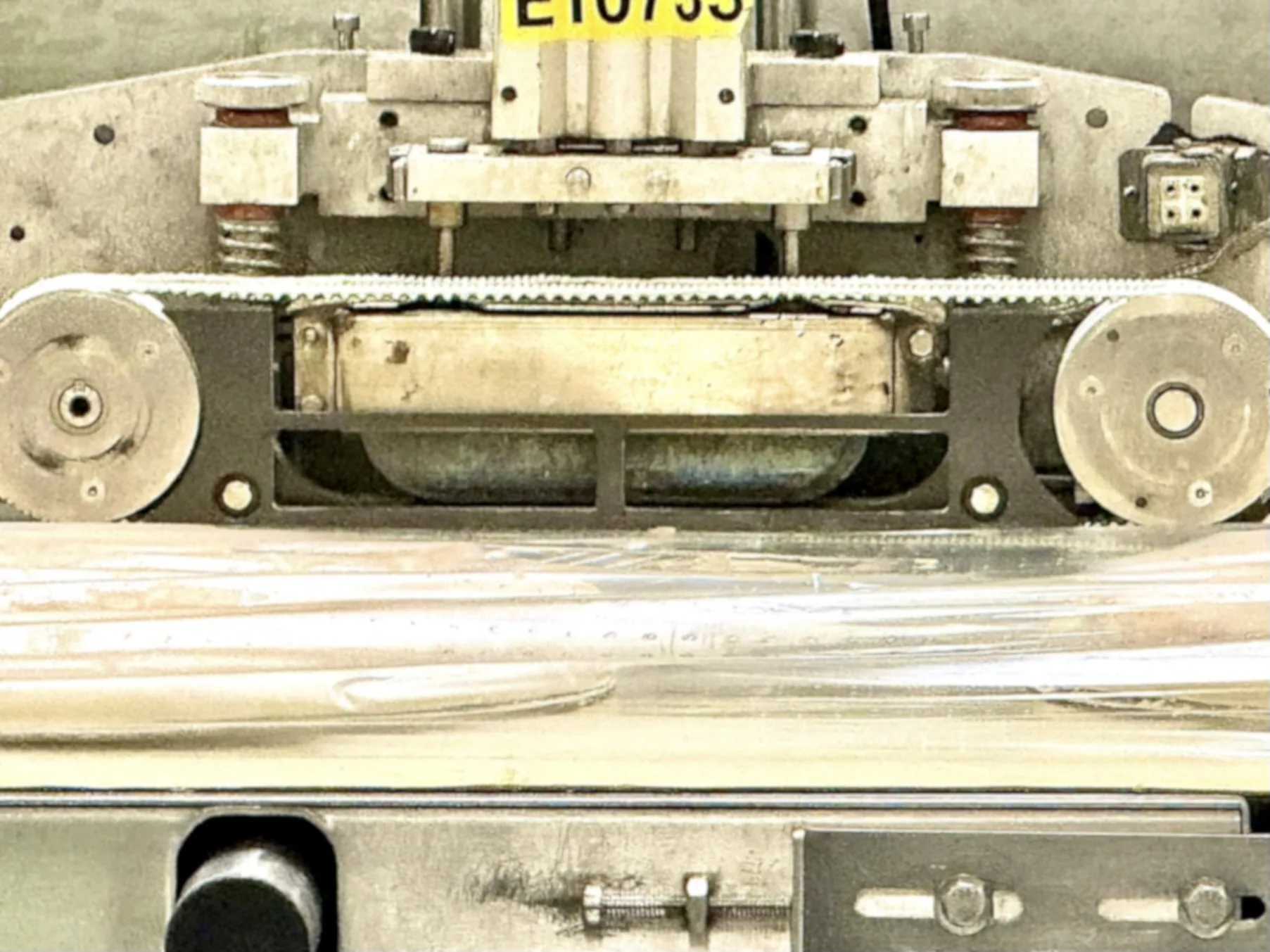
The heated sealing head installed on the line, blade in place.
The plant treats these blades as a consumable with a cleaning-and-return cycle. The question was whether cryogenic processing could keep the edge — and the chrome — intact through more of those cycles.
The line in operation: uncased pizzas feed onto film, and the heated sealing head cuts and seals the long seam as each pack passes.
What we did
The blades received an extended cryogenic treatment — a more involved process than our standard cycle, at higher cost. Cryogenic processing is a through-thickness treatment rather than a coating. It adds no dimension, so the treated blades dropped into the existing heads with no change to setup, shimming, or machine parameters. That matters more than it sounds: a solution that requires re-qualifying a line is a solution most plants will decline.
Treated blades went into normal production alongside the plant’s existing process. No line changes, no special handling, no adjusted temperatures.
What we have seen so far
We are reporting this early and we are reporting it with its limits attached.
Two blades have been pulled and inspected. We do not have their installation or removal dates, so we cannot yet state how long they ran. Both had been used on three of their four sides rather than completing a full rotation.
On those two blades, using the plant’s own cleaning tool and a scotch brite pad:
- No wear on the edge — the finding that genuinely surprised our inspector, since edge rounding is normally the first thing a used seal blade shows.
- No noticeable wear anywhere else on the blade either.
- The hard chrome plating appeared significantly more wear resistant than expected at that point in service.
- Buildup came off easily, and the blades went back into circulation faster and with less effort than the plant’s normal cleaning cycle requires.
The first finding is the one the trial was built to produce: an edge that is still an edge after service. The last one quietly supports it — a blade that cleans up easily does not need to be cleaned aggressively, so the cleaning-as-wear loop breaks. Based on this first inspection, the plant expects the treated blades to be considerably more reusable. How much more is exactly what the rest of the trial has to measure.
What this does not yet show
Being straight about this is worth more to you than a bigger claim would be.
- Two blades is a sample, not a data set. We are inspecting more.
- No run time. Without install and removal dates we cannot convert “no visible wear” into blade life. That is the number that matters and we do not have it yet.
- No untreated control. These were not run side-by-side against untreated blades under identical conditions. Until they are, “better than expected” is an impression, not a measurement.
- Three sides of four. A blade that has not completed its rotation showing low wear is partly what you would expect. This is a real confound and we are accounting for it in the ongoing inspections.
- Visual and tactile inspection only. No profilometry, no coating thickness measurement, no seal integrity data correlated to blade age.
We would rather publish a modest finding we can stand behind than a strong one we would have to walk back the first time an engineer asked a hard question.
What we are measuring next
The trial continues. What we are capturing going forward:
- Install and removal dates on every treated blade, so run hours are known
- Treated and untreated blades on the same line, same film, same product, same period
- Number of clean-and-return cycles before a blade is scrapped — the blade life number itself
- Cleaning time per blade, treated versus untreated
- Seal reject rate correlated to blade age
We will publish the second round with numbers attached, including any that do not favor the treatment. This post will be updated as inspections continue rather than replaced, so the update log at the bottom is the fastest way to see what is new.
Does this apply to your line?
The conditions that made this blade a candidate are not specific to pizza. If your line runs heated seal blades, seal bars, or sealing jaws in sustained contact with film, and you are replacing them on a schedule, the same question applies to your equipment.
That includes horizontal flow wrappers, vertical form fill seal baggers, L-bar sealers, band sealers, and side sealers — across frozen food generally, not just this category.
The honest answer to “will it work for me” is that nobody can tell you from a blog post. It is testable on your equipment in a matter of weeks.
Frequently asked questions
Does cryogenic treatment change the dimensions of a seal blade?
No. Cryogenic processing works through the thickness of the part rather than adding a layer to it. Treated blades install into existing heads with no change to shimming, clearance, or machine setup. This is the main practical difference between cryogenic treatment and a coating.
Can you cryogenically treat plated or coated parts?
Yes. The blades in this trial were hard chrome plated aluminum and were treated with the plating in place. In this case the plating itself appears to have benefited, which was not the primary expectation going in.
Does the treatment need to be repeated?
No. It is a one-time process on the part. A treated blade does not require re-treatment after cleaning or after returning to service.
Does cryogenic treatment add anything to the part?
Nothing is added, deposited, or applied. There is no chemical involved and no material introduced, which is relevant in food contact and food-adjacent environments where added coatings raise questions.
How long does treatment take, and does the part leave the plant?
Parts ship to us and back. Turnaround is typically measured in days rather than weeks. Most plants send a small batch first rather than committing a full set.
What does a trial cost?
Less than most maintenance managers expect, and the point of a trial is that you keep the data whether or not it favors us.
Run a trial on your own line
Send us two or three blades from a line where you are already tracking replacement frequency. We treat them and send them back. You run them against your existing blades under your own conditions and keep every number that comes out of it.
If the treated blades do not outlast the untreated ones on your equipment, you will know inside of a few weeks — and you will know it from your own data rather than ours.
Update log
September 2026 — Initial inspection. Two blades inspected. No visible wear, including at the edge; buildup removed easily with the plant’s standard tool and a scotch brite pad. Run hours not yet available. Trial ongoing.
Next update: additional blade inspections, with run hours where available.