Pelletizer Blades
Deep cryogenic treatment of metal pelletizer blades increases their life by an extraordinary amount. Through our specialized deep cryogenic treatment of pelletizer blades, scrap grinding blades, and pelletizer screens your company enjoys extended blade durability, has to conduct less maintenance, sharpening and downtime, and saves money. Changing pelletizer blades is an unpleasant job due to the dust, heat and noise in pelletizer rooms.
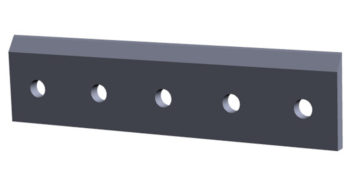
Pelletizer Blade
We’ve worked closely with several plant managers, like those at Rubbermaid Corporation, to help them treat their pelletizer blades. To read a study on those blades including the economic impact, click here.
Other Blades Respond Too
Here are industries where Deep Cryogenic Treatment will make a distinct difference:
- Paper
- Printing
- Paper
- Tape
- Film
- Foil
- Label
- Cardboard
- Plastic
- Tube
- Tobacco
- Stone
- Wood
- Food
- Steel
- Aluminum
- Silicon
- Stainless Steel
- Copper
- Tube
What It Changes About Sharpening
The blade still dulls. It dulls more slowly, which moves the interval between grinds — but the more useful change happens at the grinder itself.
You take less material off. A treated blade reaches the grinder in better condition, so it takes less stock to bring the edge back. Customers have reported this to us repeatedly, and it is the part most people do not anticipate. One plastics processor running D2 granulator knives measured it: stock removed per regrind fell from .090″ to .040″, which cut their regrind cost to a quarter and their spend on replacement knives to an eighth. Their letter is here, with six more.
That compounds, and it is worth doing the arithmetic. A blade only has so much steel above its scrap dimension. If each regrind takes off less than half what it used to, you get roughly twice as many regrinds out of the same blade. So the blade gains life twice over — longer between grinds, and more grinds before it is finished. The second one is usually the larger number, and it is the one nobody counts.
The edge comes back finer. Our cycle develops a denser population of fine eta carbides and more even hardness through the section, and a more uniform structure grinds to a cleaner edge than a coarser one does. Customers cutting abrasive and filled material are the ones who notice it first.
None of this changes your grinding procedure. Treated blades regrind normally on the same equipment, because the treatment goes all the way through the steel rather than sitting on the surface — it is not removed at the first pass and never needs reapplying after a grind.
Experience with Companies of All Sizes
At Controlled Thermal Processing, we have experience working with plants of all sizes on deep cryogenic treatment for pelletizer components, some with over 50 pelletizers at one plant. Deep cryogenic processing increased the life of pelletizer blades and screens considerably. Life went from two months to over two years for our clients. You can view more details on the cost savings to Rubbermaid here.
Controlled Thermal Processing saves many companies money in labor, sharpening, purchasing, and new parts costs. Whether you run one blade or a massive operation with over 100, partner with our team to increase efficiency and improve processes in your plants.
Two customers running granulator knives measured the difference and wrote to tell us. One went from resharpening every four weeks to nearly a year without a regrind; the other, cutting abrasive filled vinyl, went from weeks to months and cut regrind costs to a quarter. Both letters are here, alongside five more.
Here is Some Research on the Subject
Abrasive wear response of cryotreated EN45 steel in simulated wear test rig fixture
N.B. Dhokey, A. Raskar, A.R. Hake, G. Mohapatra
That study ran EN45 blades against soil containing 20% silica and measured a 28% reduction in mass loss at 750 rev/min, with surface roughness down by half. It tested sugarcane cutter blades rather than pelletizer blades — that is the honest caveat — but the failure mode, abrasive wear on a cutting edge, is the one you are fighting.
Contact Us Today
Deep cryogenic treatment of pelletizing components is well established — we have been doing it since 1980 — but whether it pays on your line depends on what your blades are made of, what you are cutting and how often you change them. That is worth a conversation before it is worth an order. If you have any questions about our cryogenic treatments of pelletizer blades, plastics scrap grinders, grinder blades, Pelletizer screens, or the results you can expect, reach out to our knowledgeable team today for more information.